
A referral partnership is a deal where a partner sends you buyers and you pay them when those buyers become customers. The partner makes the introduction. You close the sale and pay the agreed fee once the money arrives.
We read the public partner terms of HubSpot and Shopify in November 2026, along with the FTC's guidance on endorsements. One thing to know first: we make OpenPromoter. So the terms and rules come first, and our own tool gets one short section near the end.
This guide shows how referral partnerships work and how referral partners get paid, with real fees. It then covers attribution, payout timing, tax forms and disclosure, the parts most guides skip.
What Is a Referral Partnership?
A referral partnership is an agreement between a SaaS company and a business or person who recommends it. The partner makes the introduction. The company runs the demo, closes the sale and pays an agreed fee when the referred buyer pays.
Referral partners are often agencies, consultants, integration vendors and owners of tools that share your buyers. They usually do not handle the contract or support the customer. That keeps the job light for them and the control with you.
The idea overlaps with affiliate marketing. Our guide to how to find affiliates lists where both kinds of partner come from.
How Do Referral Partnerships Work?
A referral partnership runs in five steps and each needs a written rule. The partner shares a link or sends a lead. You record the source, close the sale and pay the fee once the payment clears the refund window.
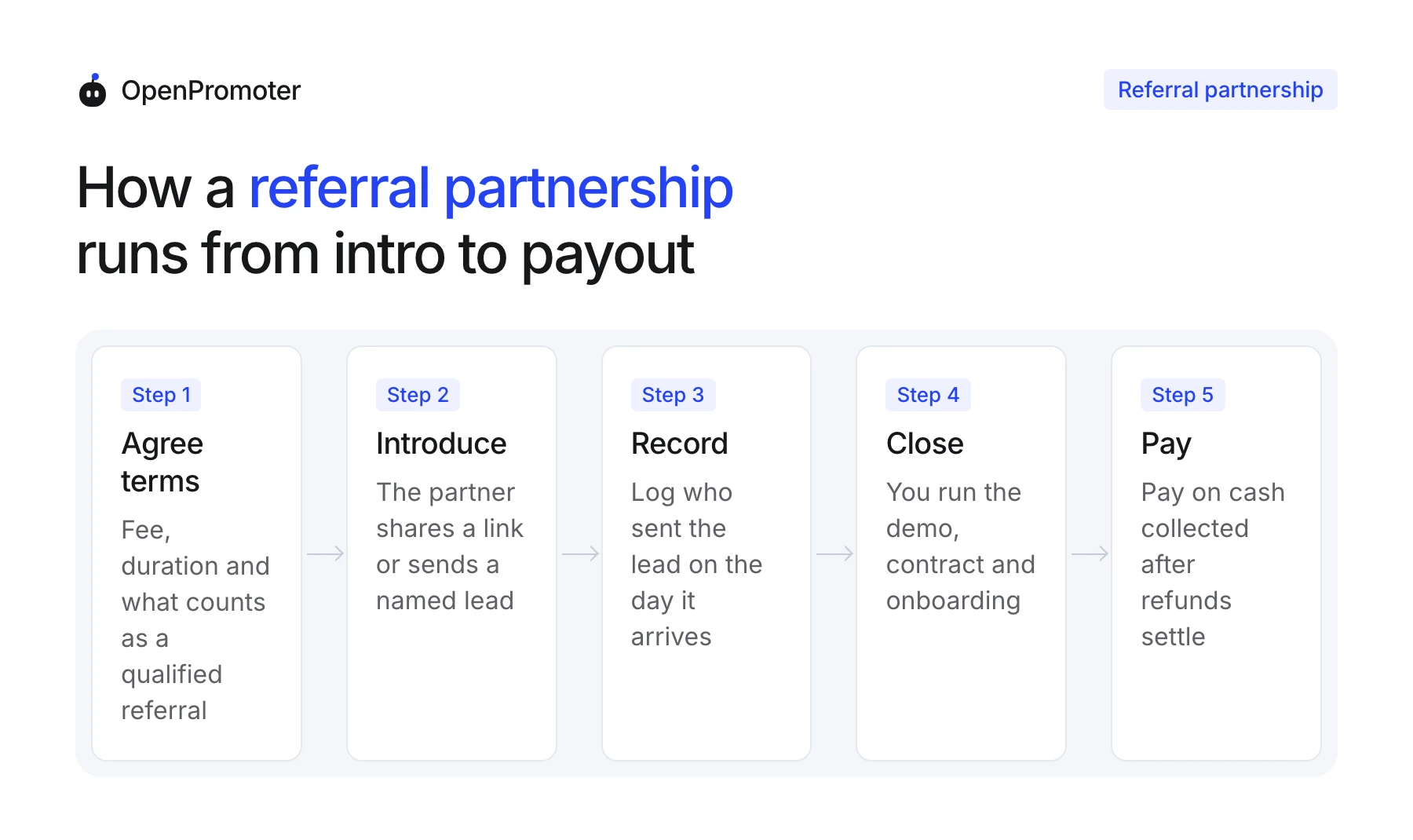
Here is what each step needs:
- Agree the terms: Fix the fee, how long it lasts and what counts as a qualified referral.
- Make the introduction: The partner shares a tracked link or sends you a lead with their name on it.
- Record the source: Save who sent the lead on the day it arrives.
- Close the sale: You run the demo, the contract and onboarding. The partner stays out of it.
- Pay after the money clears: Pay on cash collected once refunds settle.
Step 3 fails most often. Six months later the partner and the vendor remember the same lead differently. A timestamped record settles the argument before it starts.
Referral Partner vs Affiliate: What Changes
A referral partner and an affiliate both earn when a buyer pays. Referral partners are chosen, work one to one and often introduce a lead by name. Affiliates apply on their own and promote to an audience with a public link.
| Trait | Referral partner | Affiliate |
|---|---|---|
| How they join | You pick them | They apply |
| How leads arrive | A named intro or a form | A link click |
| Your contact | A person who knows them | A self-serve portal |
| Fee | Negotiated per partner | One public rate |
Many SaaS companies run both on one system. A partner who sends 20 leads a quarter can get a custom rate while the public program keeps its standard one. Our guide to affiliate commission rates shows what public programs pay.
How Referral Partners Get Paid
Referral partners are paid in one of three ways: a flat fee, a time-limited revenue share or a long revenue share. A flat fee pays a fixed amount for each qualified referral. A revenue share pays a percentage of each payment for a set period or for as long as the customer stays.
Two large vendors show all three. HubSpot's Solutions Partner policy sets the revenue share at 20% of net revenue for up to 36 months. The payment stops if the customer leaves.
HubSpot's optional upmarket referral program pays the same 20% for the first 12 months. The customer's subscription must stay active for the whole year.
Shopify's partner earnings page lists flat fees. A qualified Plus referral pays $2,500 once. A POS Pro referral pays $500 once.
A store you build and transfer to a merchant pays 20% of the monthly subscription plus 0.1% of qualifying monthly sales for four years.
Each fee has conditions. Shopify's help page says a Plus merchant must not have contacted Shopify Sales first and must pay its first Plus invoice. It also says the final decision on payouts is at Shopify's discretion.
Terms change over time. Shopify's own June 2023 partner blog described a recurring 20% on Plus referrals, and the current help page lists a one-time payout. Put a change clause in your agreement so partners know how and when you can edit the fee.
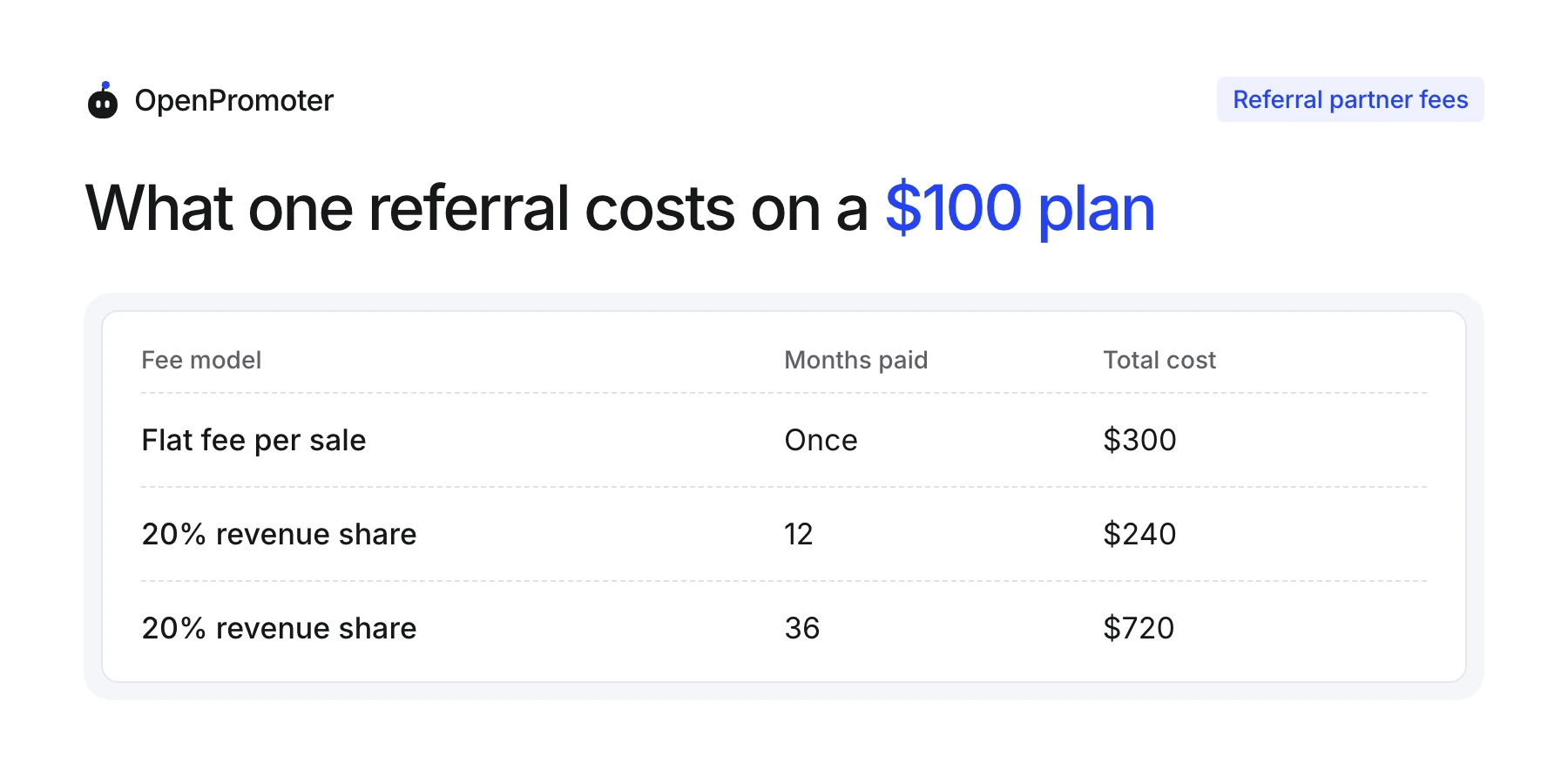
As an example, take a $100 plan. A flat $300 fee costs $300. A 20% share costs $240 over 12 months or $720 over 36 months if the customer stays.
Tip: Pay on cash collected and never on signups. A refund or a failed card then never leaves you paying for a customer who did not pay.
How to Attribute a Partner Referral
Attribution decides which partner gets paid when a buyer comes from more than one source. Pick one rule for each partner referral before the first lead. Choose a lead record, a link click in a time window or a coupon code.
Referral partners often introduce by email, where no click exists. In that case log the buyer's email with the partner's name and the date before the first call. A tracked link suits partners who write or post for an audience.
Decide two more things up front. Say how long a referral stays the partner's, and say who wins when two partners claim one buyer. A clear answer costs nothing today and saves a hard conversation later.
Payout Timing and Tax Forms
Payout timing is part of the deal and partners ask about it first. HubSpot pays quarterly about 45 days after each quarter ends and Shopify holds a first build and transfer payout for 30 days. Both also require tax paperwork before money moves.
HubSpot's policy page says shares are paid only after partners file bank details and a W-8 or W-9. It also says payments are forfeited when the paperwork is missing six months after a deal closes.
Collect a W-9 from US partners and a W-8BEN from individuals abroad. A US partner who passes the yearly threshold needs a 1099-NEC from you. Our guide to the 1099-NEC threshold has the figures.
Set the hold and the minimum payout in writing. Our guide to how to pay affiliates covers schedules, and international payout systems covers paying partners abroad.
What Referral Partners Must Disclose
Partners who earn a fee for recommending you must tell their audience about it. The FTC says a connection readers would not expect needs a plain disclosure. The notice belongs next to the recommendation in the same post and in everyday words.
The FTC's Endorsement Guides FAQ says the Guides were revised in 2023. It treats an affiliate commission as a connection to disclose. A line saying the partner earns a commission on purchases through the link works better than a bare label.
Private introductions differ from public posts. Even so, put the rule in your terms. A partner who posts about you should state the fee in plain words next to the post.
Referral Partnerships in OpenPromoter
OpenPromoter runs referral partners and affiliates together in one program. You invite a partner by name, set a custom rate and pay by Stripe Connect, PayPal, Wise or bank transfer. We make it and link the docs for each claim below.
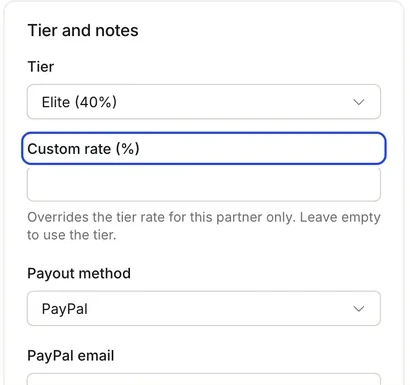
An invited partner is approved straight away and gets an email with their link. On the partner's page, Custom rate overrides the tier rate for that partner only. Leave it empty to use the tier.
The Tracking card sets the cookie window and whether the first or the last click gets the credit. A coupon code beats both because the customer typed it. The tracking docs list every signal.

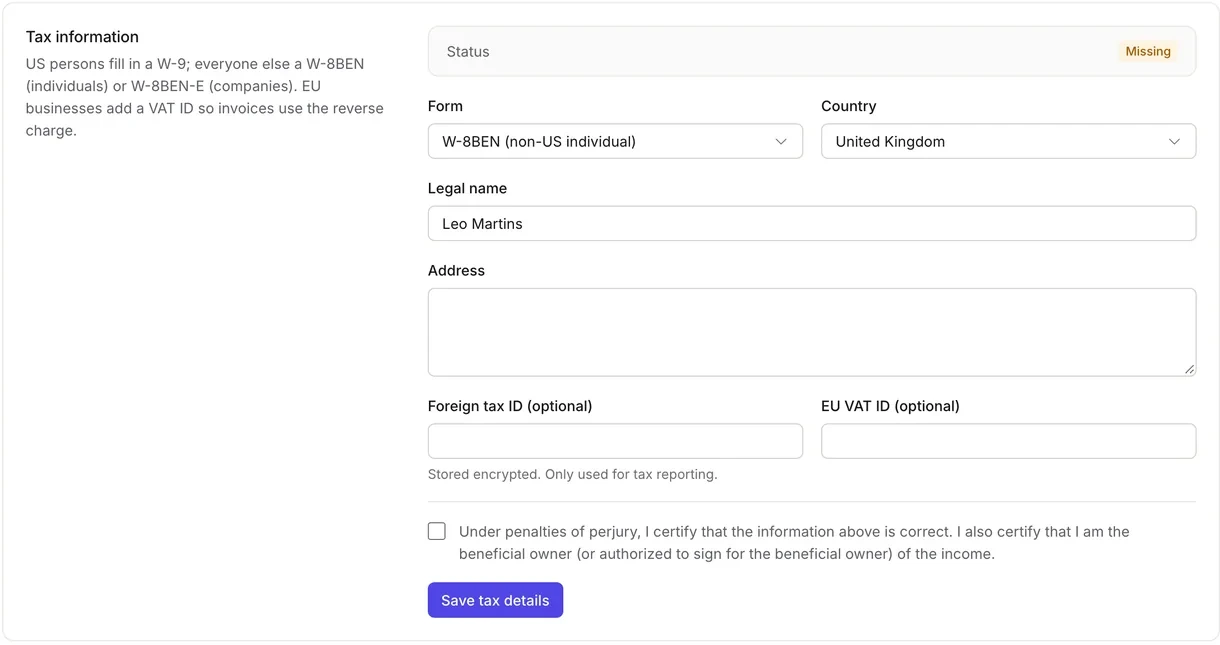
Every commission waits through a refund hold, 30 days by default. Partners enter a W-9 or W-8BEN in their portal. See the payouts docs and the partners docs for the full steps.
Conclusion
A referral partnership works when the terms are written before the first lead. Choose a fee model you can afford, record who sent each buyer and pay after the money clears. Ask partners for tax forms at signup.
The big vendors set the pattern with 20% for up to 36 months at HubSpot and $2,500 flat at Shopify. Both can change their terms. Yours should say how you will change them.
Start with a small group of partners you know. Give each a clear fee and a clear record, and widen the program once the payouts run smoothly.
Frequently asked questions
What is a referral partner?
A referral partner is a business or person who recommends your product and earns a fee when the referred buyer pays. They introduce the lead and you close the sale. Agencies, consultants and tool vendors are common examples.
How much should you pay a referral partner?
No survey we could verify sets a standard. HubSpot pays 20% of net revenue for up to 36 months, and Shopify pays flat fees from $500 to $2,500. Work out what a customer is worth and pay a share you can afford.
Do referral partnerships need a written agreement?
Yes. Write the fee, the duration, what counts as a qualified referral and how you can change the terms. Our affiliate agreement template lists the clauses to cover.
Is a referral partner the same as a reseller?
No. A reseller sells to the end customer and keeps the margin. A referral partner only makes the introduction, and you sell to the customer and pay a fee.
When should you pay a referral partner?
Pay after the customer's payment clears and the refund window ends. HubSpot pays quarterly and Shopify holds a first payout for 30 days. Pick a schedule and write it into the agreement.
Can two partners claim the same customer?
They can unless you set a rule. Credit the partner whose lead record or click came first, or the last click, and say which in your terms. Apply the same rule to every partner.